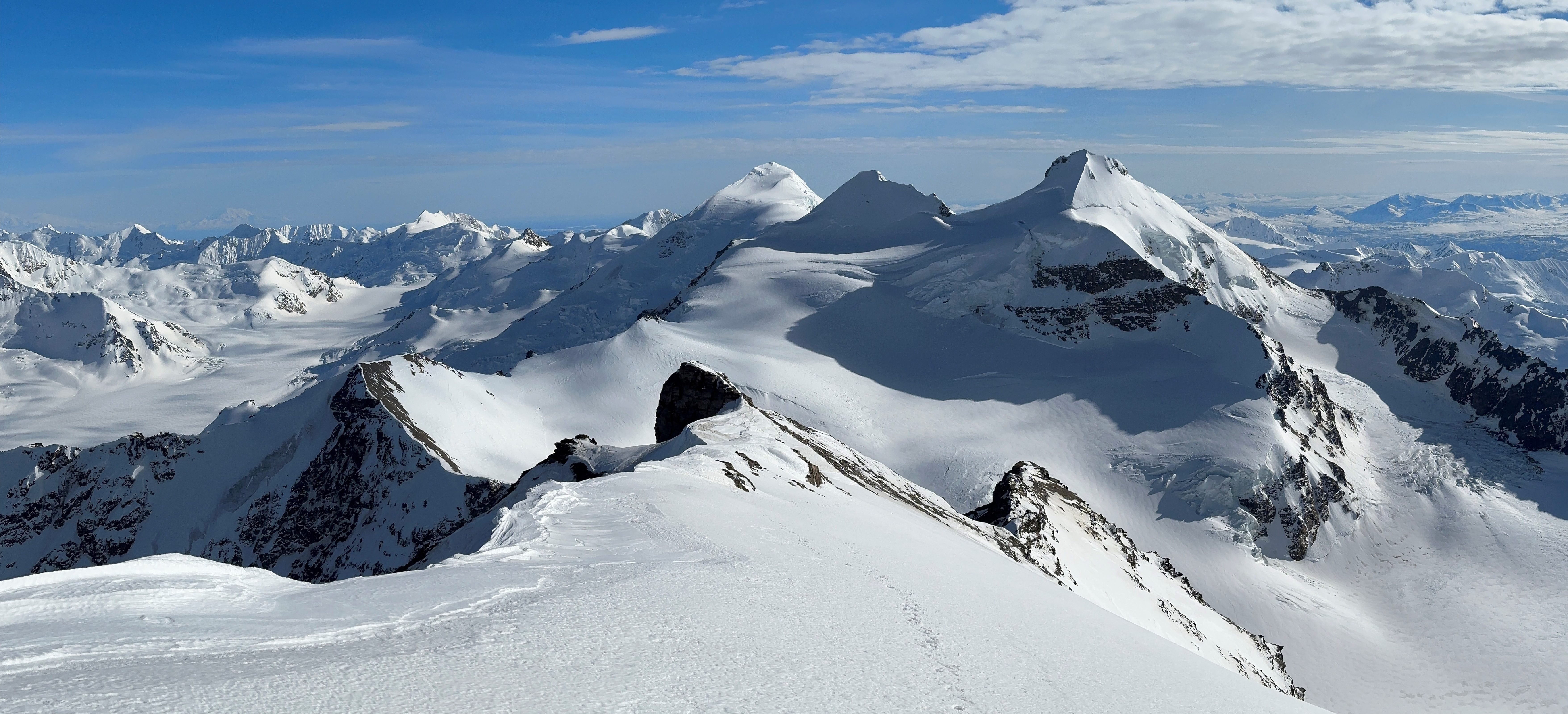


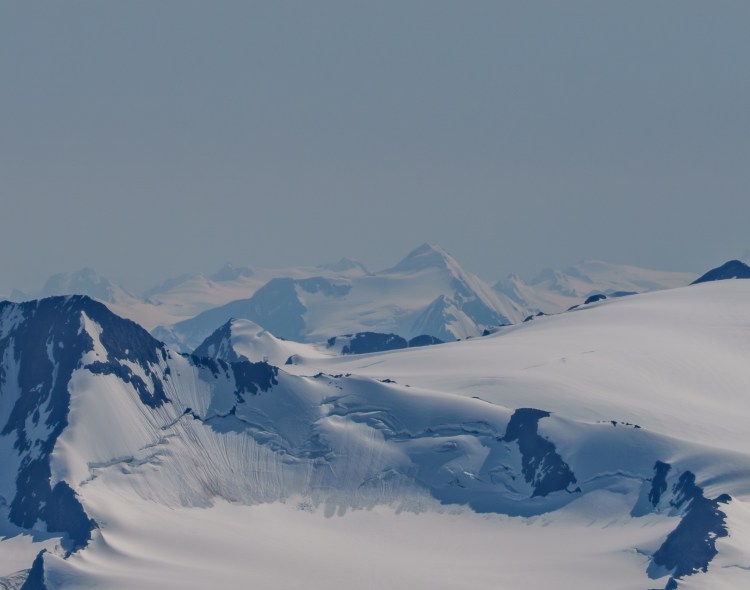
Same camera and lens, but I learned how to manual focus for more detail:


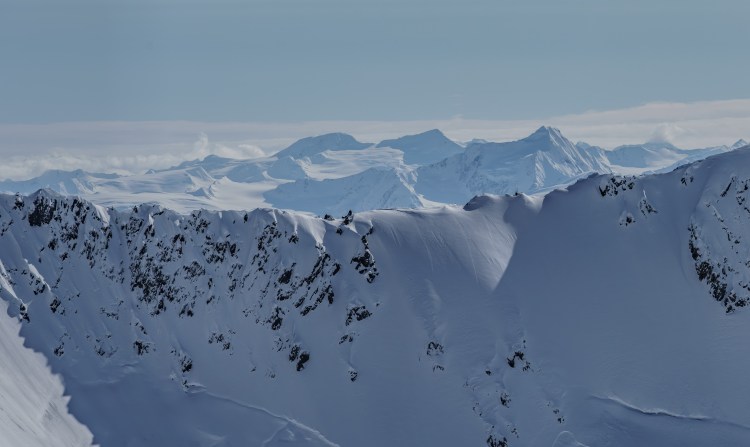
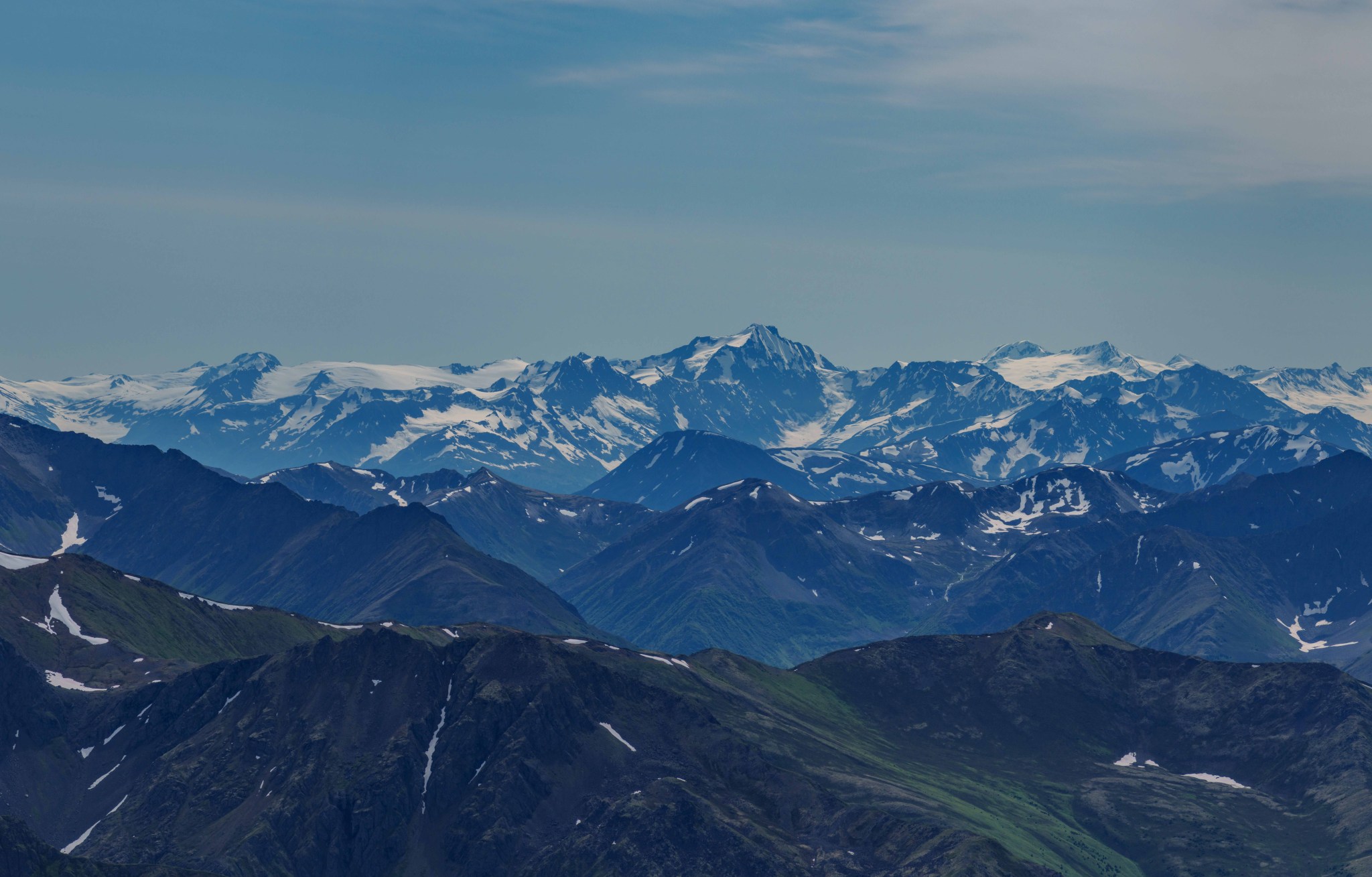
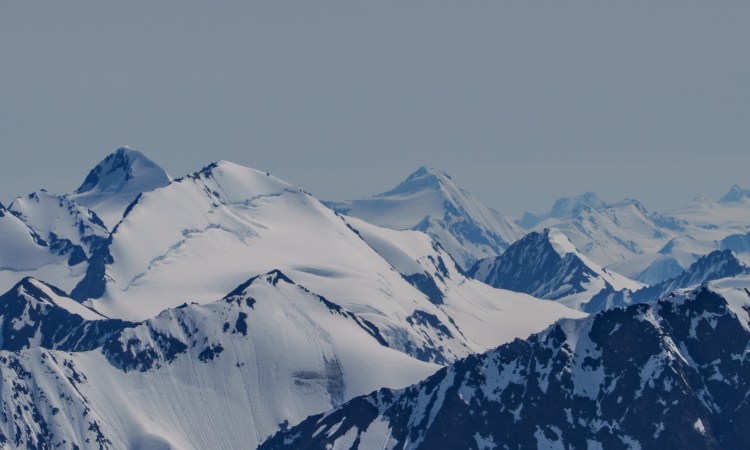


Archival Photo, credit unknown

USGS


The Portage Group
Since moving back to Anchorage in 2017, I’ve been lusting after more mountaineering opportunities to fill the void left by my lack of proximity to the Alaska Range. The Portage Group (as I’ve come to call them) is a small cluster of glaciated mountains that sit at the head of Turnagain Arm, connecting the Kenai Peninsula to mainland Alaska, and are accessed via driving down Portage Highway.
Carpathian Peak is the high point of the range at around 6,000′. elevation. The other significant road-accessible peaks are Explorer, Bard, and Byron. The starting elevation for climbing these mountains is within 100′ of zero, meaning the actual elevation of the mountains is roughly what’s required to climb them. Carpathian was first climbed in 1959 when Portage Glacier still visible from the parking shoreline. Portage Glacier is still the most common route up Carpathian.


Access Gully, Portage Confluence
Grant and I first forayed into this area during the spring of 2017 without any experience and barely any beta. We discussed the prospective route over Thai food and it looked like we would go up Portage Glacier and take a left turn..at some point. Grant skied across the lake with a heavy pack while I biked, the thin snowpack on the lake made easy travel for me. I dropped off my pack and biked back to him, ferrying his pack the last quarter or so of the trek across the lake. We found the ascent gully and managed to gain the Portage Glacier via a tiny bridge of ice and skied our way up to the confluence of the two upper branches of the glacier. Both Grant and I had separate ideas of where exactly we needed to go next, climbing the steep icefall directly up the glacier towards Carpathian seemed like a wild idea to me, whereas my idea of climbing the heavily crevassed icefall on the left seemed impractical to Grant. Unable to make progress, we camped out and skied back the next day. We were really stoked to be so far up this glacier we had both known of since we were kids, I never even considered it might be climbable. I also underestimated how cold I would be up there, I only brought a micropuffy and was quite cold all night despite my winter sleeping bag.

The route up the steep icefall to Carpathian Corner is on the left

Do we go left or right?
Carpathian Corner, Portage Headwall
The next time Grant and I headed up Portage Glacier was just under a year later with Zach Alexakis as a third member during the first weekend of February 2018. It was COLD, I recall getting sick after the trip because we were in the shade for nearly two days. The bottom of the glacier was incredibly cold when we passed by it on the way out and back. After consulting various sources, I accepted Grant was correct in his assessment we needed to go straight up the steep icefall instead of going left up a more crevassed but less steep icefall.
We skied across the lake on a Friday night after work, making camp at the top of the access gully in the pitch black. I ate too much cheese or something and randomly needed to vomit after eating—it was super weird and embarrasing, I didn’t have alcohol as an excuse.
In the morning we awoke to voices outside the tent, some folks were skiing by us on their way up the glacier. Sweet! A skintrack! They probably thought we were a shitshow, who camps so close to town and vomits outside their tent? We followed their track up the glacier, up the side of the icefall, and around what I now call “Carpathian Corner” (for really obvious reasons) to the upper portion of Portage Glacier. It’s intimate and quiet up there, with the north face of Carpathian absolutely LOOMING over the valley as soon as you turn the corner and not much else to draw one’s attention. The Portage Glacier Headwall (the top of Portage Glacier), lies at the head of the valley. I like to call this “Upper Portage Pass”.


Travel was slow, as we had heavy packs and were prepared to camp for one more night. We saw the same folks we saw earlier ski down the glacier; chatting with them, they said they were going to attempt Carpathian but the snow conditions up high seemed sketchy so they skied a different peak. We made camp around 3,500′ after probing the area for crevasses (none found) and settled in for an alpine start.
The next morning we were moving well before dawn. We roped up for the ascent to Upper Portage Pass and watched the moon rise over Carpathian Peak. We unroped once we reached the Pass and climbed out of the snow well we were in, (foolishly) leaving our skis behind. I seriously don’t know why we did that.

Taken near the top of Portage Glacier


Once out of the well, we walked through fresh powder across the icefield around the well above the Portage Glacier Headwall. Our route led us up a gentle slope that took a few turns and once dropped into a ditch (probably a crevasse, I don’t know why we didn’t rope up, but I also don’t know why we weren’t skiing) and around a frosty corner before turning right and setting eyes on Carpathian’s stunning east face. I was very intimidated because it felt like we had already been moving for so long.


“We’re trying to climb *that*?!”

For some reason I thought the slope we were below might have been the summit ridge. Nope, we had to ascend this fairly steep slope to access the scenic traverse ridge that would eventually gain the summit ridge.


We topped out of the false summit and stared down the traverse ridge. The winds weren’t too bad but were beginning to pick up. The traverse ridge was fairly knife-edgy and would take some delicate walking to traverse. Ultimately we decided to go back, though I don’t know who exactly made the decision. Also, we didn’t bring any pickets, so we had no way to protect the route. I still question our judgement, though it’s always better to walk away safely rather than tempt danger up high. The remainder of the ridge wasn’t that long, but would be steep and very exposed if we got into an avalanche.


The photo above was taken from the far left side of the ridge in the photo below

Zach and I walked down the traverse ridge a bit to get better views, especially of Skookum Valley.


Looking across the upper Portage Glacier valley we spied ski tracks on the far peak. We turned around and began downclimbing and reversing our tracks through blower powder, now well-illuminated by the sun. We still didn’t rope up and were kicking ourselves for leaving our skis/snowboard behind.


Upper Portage Pass
Later that season on March 31st, Grant and I had learned our lesson. We decided to try and climb Carpathian alpine-style, and set up skiing across the lake around 3AM with another full moon to light our way. We made fast progress across the lake, up the gully, and up the glacier, encountering our first obstacle at the icefall below Carpathian Corner, that obstacle being Grant’s paranois. He started to get worried (prematurely, in my opinion) about the stability of the snowpack up high and wanted to turn back. I can’t really defend my behavior, but I recall yelling at him something along the lines of “Grant we’re not going to turn around before we even encounter an actual problem! You’ve got good mountaineering instincts but sometimes you’re just fucking paranoid, man.” My rant over, Grant consented to continue climbing and the snow continued to be fine.

We made it to the top of Portage Glacier in perfectly calm and pleasant weather and peered at the bergshrund we needed to cross to access the icefield above. On foot, I approached the crack and the little snow bridge that crossed it. Not really thinking, I told Grant to keep me tight and I hesitantly stepped up onto the snow bridge. Feeling the sudden rush of necessity, I leaped forwards and upwards as the snow collapsed beneath me.
“Goddammit Wayne…what the fuck am I supposed to do now?”
Without a snow bridge Grant would be unable to follow. I forget if I jumped back down over the maw of the bergshrund or if we walked parallel to a better spot for him to cross. Regardless, he got over it. Once we were both above the bergshrund we made our way to Upper Portage Pass and towards the icefield. At the top of the pass we IMMEDIATELY encountered the strongest and coldest winds I’ve ever experienced. There was still a bit of a well on the other side of the pass and we thought we might be safe from the wind if we hunkered down at the bottom. I put on all my puffy clothing and attempted to walk. I felt like I was moving through jello, my whole body was being resisted by the hellacious wind. My core temperature was also plummeting, the puffy clothing didn’t help me retain much heat. After a short discussion, we decided there was no way we could climb the mountain in these winds and turned around. On the Portage side of the Pass, the air was dead calm. What. The. Fuck.
We were a couple miles from the ocean in two directions, so we must have been at a pressure gap, because the dissonance between those two spots was intense. Without much more to say, we skied down the glacier, down the access gully, and across the 3 miles of lake to Grant’s truck.
I’ve heard of various folks climbing the mountain over the decade since, but not very commonly. As I kid I would never had expected myself to ski up Portage Glacier, this mountain group is a special place as it feels quite remote while still being very close to home. The Portage Group continues to draw my interest—years after these attempts I became fixated on Byron Peak, in large part because I found Carpathian so compelling. I’d love to get to the top someday but these three adventures were were great fun regardless.


4 thoughts on “Carpathian”